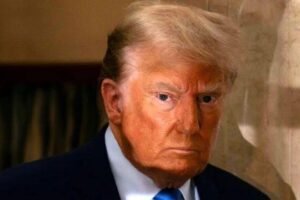
In the high-velocity world of New York politics and national media, few names carry the kind of instantaneous recognition and influence as Donald Trump Jr. does. On February 21, 2026, the landscape of American political discourse experienced a notable shift as a pivotal confirmation regarding his role and trajectory was officially announced. For decades, as the eldest son of the 45th President, Donald Trump Jr. has navigated the complex web of political expectation, media scrutiny, and familial legacy. Yet, this development in Manhattan makes it clear that his significance within the Republican Party has evolved far beyond mere inheritance. No longer just the offspring of a former president, Trump Jr. now stands as a central power broker in his own right, wielding a distinct and formidable political force that commands attention across the nation.
The announcement reverberated through mid-morning media cycles, rapidly saturating social feeds, cable news channels, and political talk shows. While legal and political analysts are still parsing the finer points of the “confirmation” in New York, the overarching implications are undeniable: the Trump family’s political architecture is being fortified for the long term. Over the last decade, Donald Trump Jr. has meticulously cultivated a brand of high-octane conservatism that resonates with a broad swath of the party base. He has emerged as a bridge between traditional GOP values and a modern, digitally savvy communication strategy that harnesses social media, streaming platforms, and high-energy public appearances. In doing so, he has positioned himself as a linchpin for the movement that his father ignited—an indispensable figure in the ongoing narrative of “Make America Great Again.”
A Beacon for the Conservative Base
To supporters, this confirmation is more than a procedural development; it is a moment of vindication and celebration. Millions of voters who feel alienated by what they perceive as the coastal elite or frustrated by the standard political establishment see in Trump Jr. a direct, unfiltered conduit to influence. He is praised as a “strong communicator” capable of translating complex policy grievances into language that is both combative and accessible, echoing the rhetorical style that propelled his father to the presidency.
Many in the conservative base argue that this moment cements his status as the de facto heir to the MAGA legacy. Far from being a mere surrogate, he has earned credibility through hundreds of rallies, extensive media appearances, and unprecedented fundraising achievements for down-ballot candidates. To these supporters, the New York confirmation signals momentum in the broader struggle to reclaim the Republican Party’s future. They see Trump Jr. as a necessary disruptor, a political figure unafraid to challenge entrenched bureaucracies, mainstream media narratives, and opposition parties with a level of fearlessness that few contemporary politicians can match.
His supporters also highlight his ability to energize younger conservative voters, many of whom are deeply engaged in digital politics. Through livestreams, viral videos, and real-time engagement on platforms ranging from X to emerging social media apps, Trump Jr. has cultivated a level of intimacy with constituents that traditional campaign strategies often fail to achieve. In their eyes, this combination of charisma, digital fluency, and political acumen ensures that he is not just a relic of his father’s era, but a durable force in shaping the GOP for the future.
The Lens of the Opposition
Conversely, the confirmation has sparked a highly vocal and organized backlash from critics. To many opponents, Donald Trump Jr. represents a polarizing figure whose rhetoric frequently inflames social and political divisions. Critics argue that his elevated position in the national spotlight signals a troubling departure from principles of civil discourse and bipartisan compromise. They point to his controversial social media presence, hardline immigration stances, environmental policy positions, and repeated assertions regarding election integrity as evidence of a political philosophy that prioritizes confrontation over consensus.
For residents of New York and citizens nationwide, the formalization of his political influence is seen as a harbinger of further polarization. Opponents warn that the so-called “Trumpification” of the Republican Party is not merely a phase but a structural shift, one that threatens to eclipse moderate conservative voices in favor of a populist, personality-driven agenda. They fear that the consolidation of Trump Jr.’s influence will embolden divisive tactics, complicate legislative negotiations, and intensify the partisan gridlock that has defined American politics in recent years.
Navigating a Changing Political Climate
The 2026 political landscape is dynamic and unprecedented, shaped by both domestic turbulence and the accelerating influence of digital information. The confirmation involving Donald Trump Jr. does not occur in isolation; it coincides with other high-stakes developments capturing national attention. From shifts among veteran journalists like David Muir to ongoing investigations and tragedies such as the Annie Guthrie case in Arizona, Americans are navigating an “infodemic” of constant news, analysis, and social commentary.
In this environment, Trump Jr.’s ability to dominate media cycles is a testament to his acute media savvy. Whether appearing on primetime news broadcasts, participating in town halls, or producing content for his own digital channels, he understands that attention is the ultimate currency in modern politics. This latest confirmation ensures that he will remain a central figure in the political conversation, influencing both the 2026 midterms and the 2028 presidential election cycle. Analysts note that his endorsement—or opposition—can make or break campaigns in key swing states, amplifying the practical power of his position beyond symbolic influence.
Legacy and the Future
Looking forward, the broader question revolves around the structural implications of this confirmation for the Republican Party. Political analysts note that the GOP is currently undergoing a generational handoff, one in which the former president remains a towering figure while his children, particularly Donald Trump Jr., are constructing the infrastructure to sustain the movement. This is not simply about name recognition; it is about institutionalizing a style of governance, communication, and public engagement that has fundamentally reshaped voter expectations in the 21st century.
Geographically, the New York confirmation underscores the city’s continuing significance to the Trump brand. Although Trump Jr. has relocated much of his primary residence to Florida, Manhattan remains central to the family’s financial, media, and political operations. The city serves as a stage for high-profile announcements, a hub for media interactions, and a symbolic anchor for the Trump family’s ongoing professional milestones. The Manhattan confirmation reflects a deliberate strategy: to maintain a foothold in the media capital of the nation while extending influence across the country.
A Denouement of Denials and Affirmations
As the initial announcement settles into the public consciousness, the national discourse is fracturing along predictable lines. Supporters envision a future in which the Trump Jr. brand of conservatism defines the GOP’s trajectory, while critics prepare for a continuation of the political battles that have dominated the last several years.
Despite legal challenges, media scrutiny, and constant partisan opposition, the Trump political identity demonstrates remarkable resilience. Today’s New York confirmation is not merely a headline—it is a declaration of intent. It asserts that the Trump influence is neither temporary nor incidental but a permanent fixture in the evolving political landscape of the United States.
In the weeks ahead, Americans can anticipate strategic appearances, follow-up statements, and calculated endorsements. As the national political chessboard resets for upcoming primaries and elections, Donald Trump Jr.’s position has been elevated to a level of unprecedented power and visibility. Whether one regards this development as a triumph, a threat, or a mixed blessing, it is clear that the narrative of 2026—and likely beyond—will be shaped by his actions, rhetoric, and strategic decisions. In essence, this confirmation has placed his name at the forefront of the story, ensuring that Donald Trump Jr. will be a defining figure in the discourse, campaigns, and controversies of the coming years.