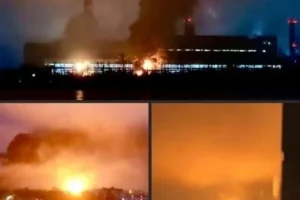
A serious highway accident involving a long-distance passenger bus and a fuel tanker caused widespread disruption after emergency crews were called to the scene during the early morning hours.
What had begun as an ordinary day of travel quickly turned into a major emergency response as authorities worked to secure the roadway, assist people involved in the collision and manage the additional dangers created by the tanker’s fuel load
The collision immediately created difficult conditions for emergency personnel.
Unlike an ordinary traffic accident, a crash involving a fuel tanker can create additional concerns because responders must consider the possibility of leaking fuel, fire or other hazards while attempting to reach passengers and drivers.
According to the original report, emergency teams arriving at the scene made protecting people near the crash their first priority.
Crews worked to establish safe access routes while simultaneously monitoring the danger associated with the fuel tanker.
Traffic was temporarily restricted in both directions while officials assessed the situation.
That decision added significant disruption for motorists who normally depended on the highway for work, school, deliveries and other daily travel.
Drivers approaching the area were forced to slow down, turn around or search for alternative routes while emergency operations continued.
The collision also created challenges for rescue teams because damaged vehicles and congestion around the scene made movement more difficult.
Emergency personnel had to work carefully while trying to reach those involved in the crash, provide assistance and move people away from potentially dangerous areas.
Scenes involving large commercial vehicles often require considerably more space and equipment than ordinary passenger-car collisions.
A long-distance bus can carry many passengers, while a tanker is substantially larger and heavier than most vehicles using public roads.
When two vehicles of that size collide, securing the area can become a complex operation even before authorities begin investigating why the accident occurred.
Emergency crews also have to consider people who may still be inside damaged vehicles.
Access can be limited by twisted metal, debris or the position in which vehicles come to rest.
Rescuers may need to create safe paths around wreckage before they can reach everyone involved.
The presence of fuel makes those decisions even more important.
Firefighters and rescue workers must avoid creating sparks or other conditions that could increase danger if fuel has spilled.
They may also establish a larger safety perimeter than would normally be necessary following a traffic accident.
The original report said responders continued working under difficult conditions to support passengers, provide medical assistance and move people into safer areas.